
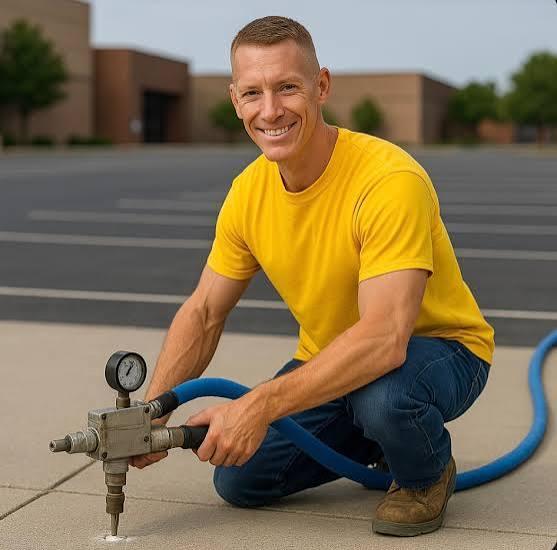
Foam Lifting vs Mudjacking for Commercial Property: The 2026 Decision
commercialfoamlift >> Commercial Foam Lift>> Foam Lifting vs Mudjacking for Commercial Property: The 2026 Decision
Foam Lifting vs Mudjacking for Commercial Property: The 2026 Decision
Foam lifting vs mudjacking commercial property: the 2026 decision
⏱️ 14 min read · Last updated: 2026
When it comes to foam lifting vs mudjacking commercial property owners and facility managers ask one key question: do you need the fastest return to service, or the lowest upfront price? For most commercial slabs, foam lifting wins on speed, lighter weight, and reduced downtime, while mudjacking still makes sense for budget-sensitive projects with a stable base and time to wait. In the end, the best choice depends on soil conditions, load demands, and how quickly your business needs to reopen.
Quick Answer: Foam lifting is usually the smarter bet for commercial properties—it cures in about 15 minutes, weighs almost nothing, and gets you back in business fast. Mudjacking is cheaper upfront, sure, but you’re looking at 24–48 hours before it’s ready and a much heavier load on the soil. In most foam lifting vs mudjacking commercial property scenarios, your call hinges on ground conditions, what the slab has to hold, and how long you can afford to shut down.
Key Facts
- Mudjacking runs $3–$6 per square foot; foam lifting starts at $5 and can hit $25.
- Foam sets in roughly a quarter of an hour. Mudjacking needs a full day or two.
- Weight difference? Night and day: foam is 2–4 lbs per cubic foot, mud slurry tips the scale at 100+.
- You’ll pay a 30–60% premium per square foot for the foam option.
- The gear isn’t cheap either—polyurethane rigs cost $40,000–$120,000, while mudjacking equipment is a more modest $15,000–$35,000.
In foam lifting vs mudjacking commercial property decisions, the trade-off usually comes down to whether you value speed and stability more than a lower invoice. In practice, both methods can work well when matched to the right site conditions, but the wrong choice can create unnecessary downtime or long-term settlement.
To make that trade-off clearer, let’s start with one of the most visible commercial scenarios—where the choice between methods becomes crystal clear.
Is foam lifting or mudjacking better for a commercial parking lot?
For a busy parking lot, foam wins—hands down. In the foam lifting vs mudjacking commercial property debate, parking lots are where the speed advantage is impossible to ignore. Foam cures so fast you could almost do the job overnight and open for the morning rush. Customers, tenants, delivery trucks—they all need access, and foam lifting gives you that. Mudjacking? It’ll get the job done, but you’re fencing off that section for a day or two, and that lost revenue stings. Foam also poses less risk of the slab sinking again if the soil underneath is sketchy. Mudjacking might make sense only if cash is the sole driver and you can absorb the closure.
Once you’ve seen how downtime plays out in a parking lot, the natural next question is what’s actually going under the slab—and that’s where the real differences between methods come into focus.

The real differences between foam injection and mudjacking
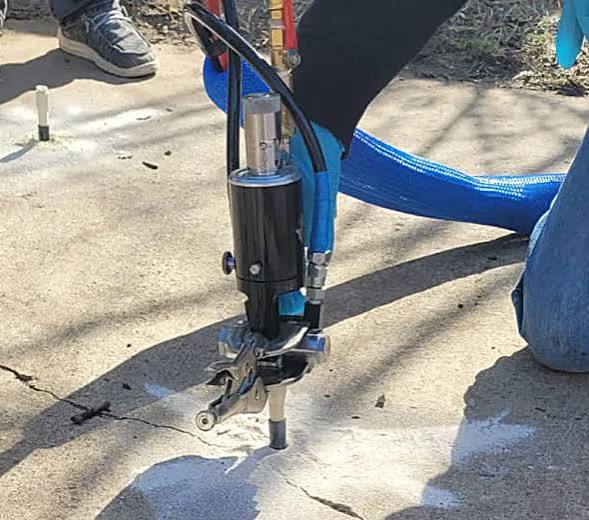
The core differences come down to chemistry, physics, and time. Foam injection uses polyurethane—light as a feather and happy in temperamental soils. That low weight means less stress on the ground beneath, and it transfers loads efficiently, too. Mudjacking—or slabjacking—relies on a cement-based grout slurry: heavier, and slower to set. This is where foam lifting vs mudjacking commercial property choices start to separate in a meaningful way, because the heavier material can become a liability if your soil’s bearing capacity is poor. So the right pick really depends on what’s under your slab and how much weight it’ll shoulder.
With those material fundamentals in place, the conversation naturally shifts to money—and specifically, when the cheaper option actually makes sense.
When is mudjacking a better choice than foam lifting?
In the foam lifting vs mudjacking commercial property trade-off, mudjacking makes the most sense when every dollar counts upfront. Also, if the business can handle a longer pause. Can you afford to close a back lot for 48 hours? Then the lower price might pencil out. It’s also an option for thicker lifts over a rock-solid subbase. But don’t ignore the trade-offs: heavier material and a higher chance of settling again in weak ground. That math stops working fast if you’re in a hurry.
So the best mudjacking candidate is a low-priority area with solid soil and a flexible schedule. But for high-stakes operations where every hour counts, a side-by-side comparison of load capacity and downtime tells the real story.
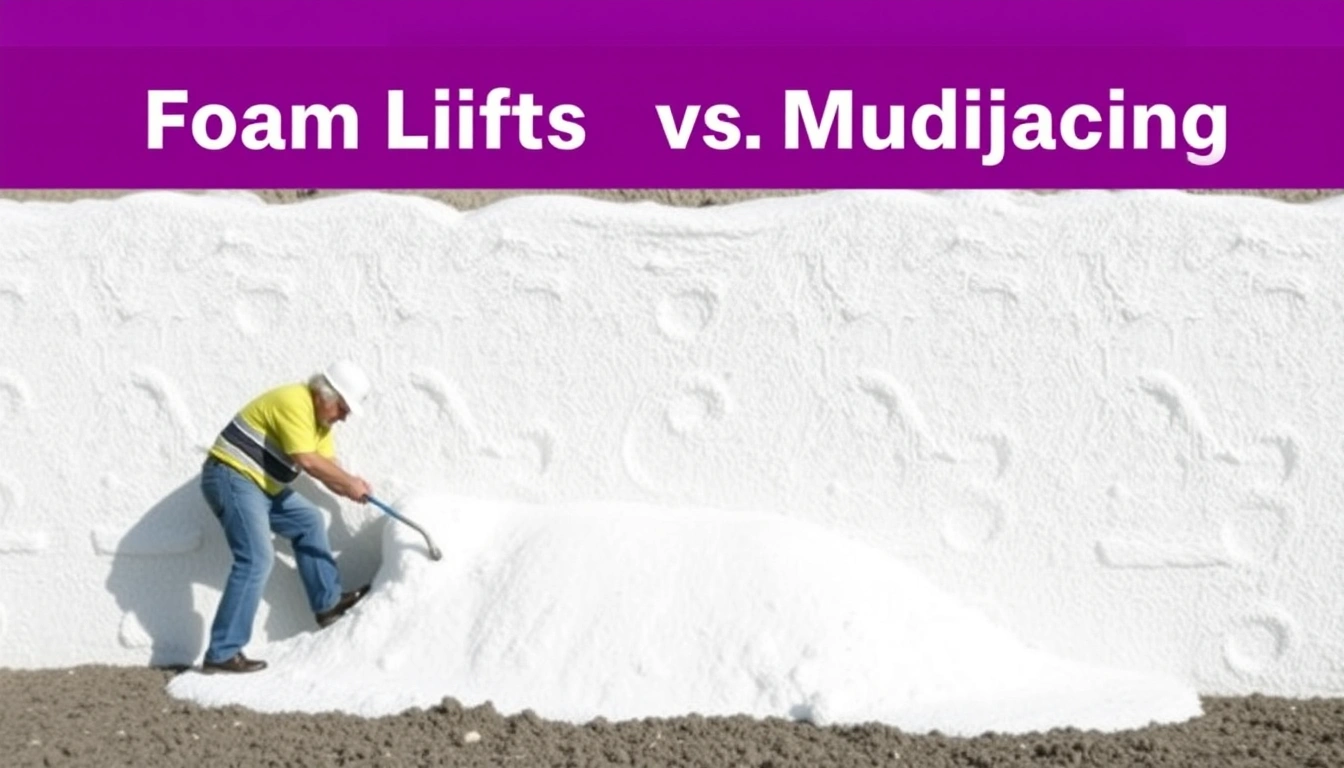
Comparing load capacity and downtime
In any foam lifting vs mudjacking commercial property comparison, downtime is where foam pulls far ahead. Fifteen minutes to cure. Your business barely skips a beat. Mudjacking ties you up for 24–48 hours—a lifetime if the area is central to operations. That delay can cripple a tight schedule.
| Criteria | Foam Lifting | Mudjacking | Winner for Specific Conditions |
|---|---|---|---|
| Cost per Square Foot | $5–$25 | $3–$6 | Mudjacking for Budget Projects |
| Cure Time | 15 Minutes | 24–48 Hours | Foam Lifting for Minimal Downtime |
| Material Weight | 2–4 lbs/cu ft | 100+ lbs/cu ft | Foam Lifting for Weak Soils |
| Longevity | 15+ Years | 5–10 Years | Foam Lifting for Long-Term Use |
| Equipment Cost | $40,000–$120,000 | $15,000–$35,000 | Mudjacking for Lower Start-Up |
Beyond the clock, foam’s featherweight character helps prevent the slab from sinking back down later—especially on finicky soils. Mudjacking remains practical when speed isn’t everything. Sometimes, saving on the initial quote justifies the wait. In foam lifting vs mudjacking commercial property decisions involving long-term durability, the lighter material consistently outperforms.
That said, numbers on a table only tell part of the story. The right method also depends on how the slab is actually used day to day—which is why the most useful comparison happens in real-world scenarios.
Common scenarios where one method prevails
In foam lifting vs mudjacking commercial property projects, high-traffic lots default to foam. It keeps operations moving by getting crews in and out quickly, which matters when customers, tenants, or delivery vehicles are always coming through. Budget-driven projects with no urgency? Mudjacking can be the workhorse. Maybe it’s a back-of-house area that can stay closed for a week. No problem. Soil conditions tip the scales, too. Foam thrives on unstable or soft ground. Give mudjacking a solid foundation and a stable subbase, and it’ll do the job without breaking the bank.
With those real-world patterns in mind, the overall verdict becomes much clearer.
Our verdict: choose wisely
For any foam lifting vs mudjacking commercial property evaluation, the answer depends on your priorities. Opt for foam lifting when time is money, stability is key, and you can’t shut down. Most busy commercial properties fit that bill. Go with mudjacking when the initial price tag matters more than reopening tomorrow. It works for less critical areas and where the soil is already solid. Neither method is a magic fix for catastrophic ground failure. Unstable subgrades might need serious soil work first—otherwise, you’re just putting a bandage on a broken bone.
Key Takeaways
- Foam sets in minutes; downtime vanishes.
- Mudjacking is easier on the wallet but heavier and slower.
- Lighter foam means less chance of sinking again later.
- Your decision boils down to soil type and how long you can stay closed.
Common questions about foam lifting vs mudjacking commercial property
How does foam lifting reduce downtime for businesses?
Simple: it cures in about a quarter of an hour. You’re back to business almost before you notice it was closed.
Source: www.homeadvisor.com
What is the average cost difference between foam lifting and mudjacking?
Foam lifting costs $5–$25 per square foot; mudjacking runs $3–$6. Foam’s higher upfront expense often pays back through less downtime and a longer lifespan.
In what situations is mudjacking still a viable option?
When saving cash now outweighs the need for speed. Best for non-critical zones that can afford a longer closure.
Does the weight of the material affect long-term stability?
Absolutely. Foam’s 2–4 lbs/cu ft puts minimal stress on weak soils. Mudjacking’s heavy slurry—over 100 lbs per cubic foot—can cause problems in poor ground conditions.
What equipment costs should contractors consider?
Polyurethane injection gear runs $40,000–$120,000; mudjacking rigs cost $15,000–$35,000. The heftier investment in foam equipment reflects its faster job completion and wider use cases.
The bottom line
For most foam lifting vs mudjacking commercial property projects, foam lifting is the superior option—it’s fast, lightweight, and keeps your doors open. Mudjacking has its place when the budget is the primary constraint and the property can handle a delay. Let the soil type, load requirements, and your tolerance for closure guide you. Need a starting number? Plug your details into a commercial foam lifting cost estimate calculator to see what fits your budget.
See also: commercial foam lifting
See also: commercial foam lifting
See also: commercial foam lifting cost estimate calculator
Related: mudjacking vs foam lifting commercial parking lot
Related: foam lifting vs mudjacking cost per square foot commercial
Related: polyurethane foam density commercial lifting applications
See also: foam lifting vs mudjacking commercial property
See also: commercial foam lifting [city]
See also: commercial foam lifting
Related Post
Commercial Foam Lifting Cost, Companies & Timing for 2026
Commercial Foam Lifting Cost, Companies & Timing ⏱️ 15 min read · Last updated: 2026…