

Commercial Foam Lifting: Load Class Decision Guide 2026
commercialfoamlift >> Commercial Foam Lift>> Commercial Foam Lifting: Load Class Decision Guide 2026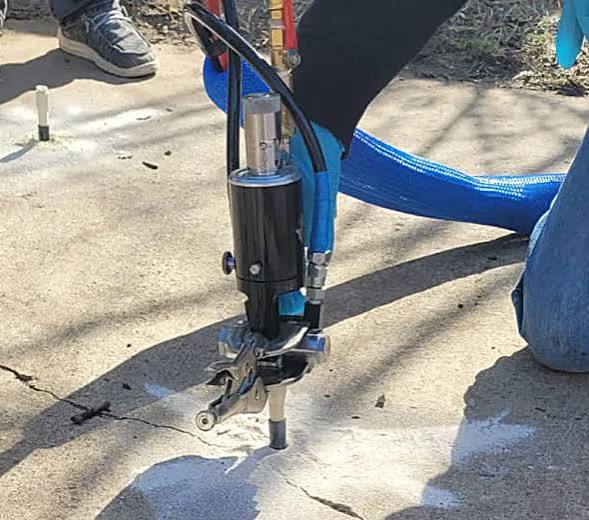
Commercial Foam Lifting: Load Class Decision Guide 2026
Commercial foam lifting: load class decision guide 2026
⏱️ 15 min read · Last updated: 2026
Quick Answer: Commercial foam lifting uses high-density polyurethane foam injection to raise and stabilize sunken concrete slabs—with traffic return possible in as little as 15–30 minutes. It is the right call when your slab is structurally sound, voids exist beneath it, and your facility cannot absorb the 7–28 days of downtime that full concrete replacement demands. The critical variable is foam density: light commercial needs 4–6 lb/ft³ grade; warehouses and loading docks need 8–10 lb/ft³ rated at 165–280 psi.
Key Facts: commercial foam lifting (2026)
- Cost range: $3–$8 per sq ft for light commercial; $10–$25 per sq ft for heavy industrial and airport applications
- Compressive strength: industrial-grade polyurethane foam (8–10 lb/ft³) carries 165–280 psi at 10% deflection per ASTM D1621—versus 35–95 psi for standard residential 4–6 lb grades
- Cure time: polyurethane foam reaches working strength in 15–30 minutes; forklift and heavy truck traffic typically returns within 1 hour of injection
- Downtime: commercial foam lifting takes 2–6 hours per repair zone; full concrete slab replacement requires 7–28 days for demolition, pour, and cure
- Lifespan: 5–10 years under regular vehicle traffic; 10–15 years in stable-soil, controlled-load environments
- Slab thickness range: 4–6 inches for retail and office; 6–12 inches for industrial warehouse and heavy manufacturing
A mudjacking crew quoted the facility manager $14,000 to fix three settled bays in the loading dock. The foam contractor finished all three in five hours and charged $5,400—and forklifts were back on the floor before the crew packed up. That gap is not unusual, and it is a useful entry point into why commercial foam lifting has taken over a market that mudjacking used to own.
Source: dataintelo.com
The catch: foam lifting is not the right call on every commercial slab. Use the wrong foam density for a high-load application and you will be back in the same situation in 18 months. Ignore the underlying soil instability and even perfect polyurethane foam injection will not hold. The decision hinges on three variables—your slab’s structural condition, your facility’s load class, and what is happening in the subgrade below the concrete.
What most guides skip entirely is the commercial-specific layer: how ADA compliance timelines create legal urgency, how hourly downtime costs change the math on foam versus full replacement, and how high-density foam grades used in warehouse and port applications differ fundamentally from what a residential driveway contractor keeps on the truck. This guide covers all three.
What is commercial foam lifting and how is it different from residential foam lifting?
Commercial foam lifting—also called commercial polyjacking or polyurethane foam slab lifting—injects two-component polyurethane foam through small holes drilled in the concrete. The foam expands beneath the slab, fills voids in the subgrade, lifts the settled panel back to target elevation, and then cures to a rigid structural support layer. The basic chemistry is the same whether you are doing a driveway or a distribution center floor. The foam grade, injection pressure, hole spacing, and documentation requirements are not.
Residential applications use 4–6 lb/ft³ polyurethane foam with compressive strength ratings of 35–95 psi—enough for passenger vehicles, not forklifts. Commercial foam lifting specifies 8–10 lb/ft³ high-density polyurethane foam rated at 165–280 psi at 10% deflection per ASTM D1621, according to BlendPolyol’s 2026 structural lifting specifications. At the airport and port tier, specialty 10 lb/ft³ foam reaches 250–290 psi. That is not a minor specification difference. It determines whether the foam holds or fails under the first loaded truck.
The project scope also differs in ways that catch facility managers off guard. A residential foam lift might repair 400 sq ft of driveway in a single visit with no documentation. A commercial concrete leveling project may span 10,000 sq ft of slab-on-grade, require shift-schedule coordination, demand written elevation reports for ADA liability, and warrant a geotechnical assessment before any injection begins. Those are not complications—they are the standard operating procedure for any contractor doing commercial work correctly.
The global slab stabilization foam injection market reached USD 1.42 billion in 2024 and is growing at a 6.9% CAGR, in part because the commercial demand has scaled regional contractor supply. Most major metro areas now have operators who work exclusively on commercial slab-on-grade repair, running commercial-grade injection equipment on dedicated trucks—not the same rigs used for driveways the day before.
📊 Did You Know: Illinois DOT used polyurethane foam injection to repair a 42-mile stretch of I-294 where sections had dropped ½ inch to 5 inches—and explicitly excluded mudjacking as an alternative due to added weight and cure-time concerns, per Acme Concrete’s project documentation. A highway DOT rejecting mudjacking by name is a meaningful specification signal.
Quick check: If your facility operates vehicles heavier than 10,000 lbs GVW, runs continuously with no tolerance for multi-day closures, or must meet ADA Standards for Accessible Design on any pedestrian route, you are in commercial territory—regardless of the building’s square footage or whether it looks like a “small” job.

The load class framework: matching foam grade to your facility
The single most important thing you can determine before calling a foam contractor is your facility’s load class. Choosing the wrong foam density is the most common reason a commercial foam lift fails in under three years—and it is entirely preventable with five minutes of research.
Commercial floor loads fall into four practical tiers, each with a corresponding foam specification:
| Facility type | Typical floor load | Foam density needed | Compressive strength target | Choose slab replacement instead if… |
|---|---|---|---|---|
| Retail, office, restaurant | 50–150 psf | 4–6 lb/ft³ | 60–95 psi | Cracking covers more than 40% of slab surface |
| Light industrial, auto service, distribution | 150–350 psf | 6–8 lb/ft³ | 120–165 psi | Void depth exceeds 6 inches or slab thickness is under 4 inches |
| Warehouse, manufacturing, loading dock | 350–800 psf | 8–10 lb/ft³ | 165–280 psi per ASTM D1621 | Rebar is severely corroded or slab shows structural delamination |
| Port container yard, airport apron, heavy plant | 800–1,500 psf and above | 10–12 lb/ft³ specialty | 250–290 psi, ≥92% closed-cell per ASTM D2856 | Original slab design load was never appropriate for current operations |
Port container yard slabs transfer stacked container loads of 150–300 psi to the slab surface, requiring high-density structural foam with ≥92% closed-cell content certified per ASTM D2856 for long-term stability. That specification eliminates most general contractors from consideration on port-grade slab repair. If a contractor quotes a container yard job with the same foam they use for parking lots, that is a disqualifying error.
Load class also determines injection hole spacing. Under ASCE 7-22 load standards, the foam beneath a slab-on-grade must provide uniform bearing pressure without creating localized stress concentrations. In practice, this means 6–8 injection points per 10-foot panel for heavy industrial applications, versus 3–4 for light commercial. Contractors who use residential hole-spacing patterns on warehouse floors create a corrugated pressure distribution beneath the slab that causes differential re-settlement within two to four years.
💡 Pro Tip: Ask your contractor for the product data sheet (PDS) for the specific foam being used on your project. You want the ASTM D1621 compressive strength value at your specified density—not a marketing claim or a general product category description. If they cannot produce the PDS on request, that is a red flag for any commercial application above light industrial.
Quick check: If your facility’s floor load rating is not posted or documented, your original building permit and structural drawings will list the design live load in psf. That number maps directly to the foam density column in the table above. If operations have changed since original construction, use the current load—not the original design figure.
Is foam lifting strong enough for heavy equipment in a warehouse?
Yes—provided the foam density matches the load. Industrial-grade polyurethane foam at 8–10 lb/ft³ carries 165–280 psi compressive strength, which is sufficient for standard warehouse forklifts from 5,000 to 40,000 lb capacity and most class 8 truck traffic through loading docks. The limiting factor in a failed commercial foam lift is almost never the foam. It is the concrete slab or the subgrade.
A 6-inch concrete slab on stabilized subgrade can handle a 50,000 lb forklift if the load is distributed correctly. What fails is typically the soil beneath the slab—not the foam, not the concrete itself. That is why the void filling step in commercial polyjacking is as structurally important as the lifting step. The foam must densify and stabilize the loose or eroded soil layer before it expands further to elevate the slab. Contractors who rush the injection to accelerate the lift often create a firm foam column with unsupported soil on either side—and the slab re-settles within two years, frequently unevenly.
Industrial-grade polyurethane foam used in commercial slab lifting carries ASTM D1621 compressive strength of 165–280 psi at 10% deflection for 8–10 lb/ft³ density grades—versus 35–95 psi for standard residential 4–6 lb grades, per BlendPolyol’s 2026 structural specifications. That four-fold strength difference is the reason foam specification cannot be borrowed from a residential job.
Airport applications push the load requirement further still. Aircraft landing gear contact pressures range from 60 to 250 psi depending on aircraft class, requiring 10 lb/ft³ specialty foam rated at 250–290 psi compressive strength. A regional airport runway approach slab repaired with residential-grade foam would fail under the first commercial aircraft. The specification gap is not theoretical—it is the difference between a repair that lasts a decade and one that fails in a single operating season.
The practical rule for warehouse applications: specify foam that exceeds your floor’s point load rating by at least 20%. If your heaviest forklift generates 200 psi contact pressure at the wheel, specify foam rated at 240 psi minimum. That buffer accounts for dynamic loads—the difference between a forklift sitting still and the same forklift braking hard or cornering under full load. Dynamic loads can spike 40–60% above static ratings on hard-surface warehouse floors.
Quick check: Contact your forklift manufacturer for the maximum wheel load specification in psi—this is in the equipment data plate or operator manual. That figure, not the vehicle’s gross weight, is the number that drives your foam specification on any commercial job.
How does foam lifting compare to replacing the entire concrete slab for a commercial property?
Foam lifting beats slab replacement on cost and downtime in most commercial scenarios—but full concrete replacement is the right call in specific circumstances, and choosing incorrectly in either direction is expensive. Here is the direct comparison:
| Factor | Polyurethane foam injection | Mudjacking | Full slab replacement |
|---|---|---|---|
| Cost per sq ft (commercial) | $3–$25 depending on load class | $2–$8 | $30–$80 and above |
| Return to traffic | 15 min to 1 hour | 24–72 hours | 7–28 days |
| Adds weight to subgrade | No (foam weighs 0.5–1.0 lb/ft³) | Yes (cement slurry adds load) | Yes (concrete at 150 lb/ft³) |
| Addresses soil instability | Yes — void filling and stabilization | Partial — fills voids, adds weight | Only with separate subbase work |
| Expected lifespan | 5–15 years depending on load and soil | 3–7 years | 20–30 years if subgrade is also addressed |
| ADA compliance achievable | Yes — lift control within ⅛ inch | Limited — less precision | Yes |
| Best for | Structurally sound slab with voids below | Low-load, budget-constrained applications | Structurally failed or load-undersized slab |
The 7–28 day return-to-traffic window for full concrete replacement is the number that closes most commercial decisions. A distribution center running two 10-hour shifts can absorb $50,000–$200,000 in lost productivity during a complete slab replacement—before a single dollar of concrete costs is added. If the commercial foam lift on the same area costs $15,000 and the replacement costs $60,000 in direct costs plus $120,000 in downtime losses, the ROI calculation takes about thirty seconds.
Replacement wins in a specific set of circumstances: when the slab is structurally compromised. Severe rebar corrosion, alkali-silica reaction spalling, freeze-thaw cycle damage penetrating the full slab depth, or concrete that was poured undersized for current load demands—none of these conditions are fixed by foam injection. Foam can lift a settled slab back to grade. It cannot repair bad concrete. Confusing those two problems is the most expensive mistake in commercial slab-on-grade repair.
⚠️ Avoid This Mistake: Choosing foam lifting over replacement purely on cost when the concrete surface shows D-cracking—a pattern of fine parallel cracks running near and parallel to joints, caused by freeze-thaw cycle aggregate expansion—means you will spend the foam money and still need a full replacement within 2–3 years. Always assess concrete condition independently of the settlement question.
Quick check: Walk the slab and tap it with a hammer at 2-foot intervals. A hollow sound means a void beneath the surface—foam-lift territory. If the hollow sound seems to come from within the concrete itself, or if the surface flakes under light impact, that is internal concrete degradation. That changes the repair path entirely.
The decision workflow: qualifying your commercial slab in 5 steps
Run through these five steps before contacting any contractor. This process protects you from being sold the wrong solution and gives you the vocabulary to evaluate competing quotes on equal terms.
- Document the settlement pattern. Measure the elevation difference at each slab joint or crack with a 4-foot level or digital straightedge. Record the highest differential found. Any single transition exceeding ½ inch on an accessible route is an ADA Standards for Accessible Design violation that creates documented liability from the day it is identified. This measurement also tells you whether you have uniform settlement across a panel—typically void-related—or localized cracking at specific points, which suggests structural failure rather than subgrade movement.
- Assess the concrete condition. Walk the full repair area looking for D-cracking, delamination (layers of the slab separating from each other), exposed or corroded rebar, or spalling deeper than ½ inch. If more than 25% of a given panel shows these conditions, order a concrete core sample before making any repair decision. Foam injection is not appropriate for concrete with compromised internal structure, regardless of how cleanly the surface reads.
- Identify the cause of settlement. Settlement caused by soil erosion, utility trench compaction failure, or freeze-thaw cycle subgrade displacement is direct foam-lift territory. Settlement caused by organic material decomposition, mine subsidence, or expansive clay without prior treatment is not—these require a geotechnical assessment before any repair begins. The fastest field diagnostic: ask whether the settlement appeared suddenly during or after a major rainfall (erosion signature) or developed gradually across seasons (compaction or organic decomposition signature).
- Confirm your load class. Pull your facility’s original structural drawings or certificate of occupancy file. Find the design live load in psf. Match it to the load class table in the previous section. If your operations have changed since original construction—new equipment, different tenants, increased vehicle weight—use the current operational load, not the original design figure. This is a common mismatch in older industrial buildings.
- Get three quotes with foam specifications included. Each quote should name the foam density in lb/ft³, the ASTM D1621 compressive strength rating, the injection hole diameter and spacing, and the post-lift monitoring or warranty period. If a contractor’s quote does not include foam specifications, request them in writing before signing. Comparing quotes without specifications is comparing apples to unspecified objects—the price difference between 4 lb/ft³ and 10 lb/ft³ foam on the same repair area can be $8,000 or more on a mid-size project.
💡 Pro Tip: For slabs thicker than 6 inches, request a GPR (ground-penetrating radar) scan of the problem area before any foam injection. GPR maps void location, depth, and lateral extent so the contractor targets injection precisely rather than estimating from surface cracks. A GPR scan costs $500–$1,500 and routinely saves $3,000–$8,000 in unnecessary injection material on larger commercial jobs.
Quick check: If all five steps point to soil-related settlement beneath a structurally sound slab with a documented load class, commercial foam lifting is the correct primary repair path. If step two or three raises flags, resolve those conditions first—foam on a compromised slab or an undiagnosed soil condition is money spent toward a future replacement.
ADA compliance windows, downtime costs, and ROI per square foot
The financial case for commercial concrete leveling via foam injection changes dramatically once downtime costs and ADA liability are factored in—two variables that almost every foam lifting article ignores entirely.
The ADA compliance urgency factor
Under the ADA Standards for Accessible Design, any vertical change in level greater than ¼ inch on an accessible route requires correction. Changes between ¼ and ½ inch must be beveled at a 1:2 slope. Changes above ½ inch must be eliminated entirely. A 1-inch trip hazard at a commercial entrance or parking lot approach is not just a safety issue—it is a documented ADA violation that creates ongoing liability from the date it is identified, not the date it is reported.
Commercial foam lifting achieves precise lift control—typically within ⅛ inch of target elevation—which makes it a viable compliance path without reconstruction. Mudjacking is less controllable; slab replacement achieves compliance but at full downtime cost. For facilities where ADA routes carry heavy pedestrian traffic during business hours, the 15–30 minute return-to-pedestrian-traffic window for polyurethane foam injection often makes it the only realistic same-day repair option.
Calculating your actual downtime cost
Before evaluating any repair quote, calculate your facility’s cost per hour of operational shutdown. A manufacturing facility running two shifts at 80 workers averaging $35 per hour carries a labor cost of $2,800 per hour of shutdown—before counting lost output, delayed shipments, or equipment restart time. A full slab replacement in a production aisle requiring 40 hours of zone closure costs $112,000 in labor alone, on top of a $45,000 concrete contract.
A commercial foam lift on the same aisle: $8,000 in materials and labor, 4 hours of zone isolation, production resumes the same shift. The repair-cost comparison is close. The total-cost comparison is not even close.
ROI per square foot in real terms
At $8–$12 per sq ft for warehouse-grade polyurethane foam injection, a 500 sq ft loading dock repair runs $4,000–$6,000 in direct repair cost, compared to $15,000–$40,000 for replacement. Add avoided downtime and the ROI on foam lifting is typically 4:1 to 8:1 in the first year alone—on the assumption that the void filling step was executed correctly and the foam density matches the load class. That 8:1 figure collapses to break-even or worse if the slab re-settles because the injection was underpowered or the soil issue was not addressed.
The slab stabilization foam injection market is projected to reach USD 2.57 billion by 2033, growing from USD 1.42 billion in 2024 at a 6.4–6.9% CAGR—a growth rate driven largely by commercial and infrastructure adoption rather than residential demand, reflecting the ROI case that facility operators have validated in real projects.
Quick check: If your facility’s hourly operating cost exceeds $500, the downtime math almost always favors foam over replacement for any structurally sound slab. Run that number before reviewing a single quote—it will tell you how much downtime risk you can actually afford before the break-even calculation shifts.
When the standard advice breaks down: 5 edge cases
Standard foam lifting guidance is calibrated for the most common scenario: void-related settlement beneath a structurally sound slab on stable mineral soil. These five situations fall outside that pattern—and applying the standard advice in any of them results in either wasted investment or a repair that fails inside 24 months.
1. Expansive clay soils
Expansive clay soils, common across the southern and central United States, swell when saturated and contract when dry—creating cyclic vertical movement year over year. Commercial foam injection fills the void at one moisture state, but the soil continues cycling. The foam resists heave but does not stop the underlying movement.
What to do instead: require a geotechnical assessment before any foam work. The soil may need chemical stabilization—lime or Portland cement injection—before polyurethane foam is appropriate. Foam injection without prior soil treatment on active expansive clay will re-settle or crack the slab within one to three wet-dry cycles. The repair looks right on day one and fails by year two.
2. Active utility voids beneath the slab
If settlement is caused by an active leak from a water main, storm drain, or sewer line beneath the slab, polyurethane foam injection will fill the current void—but ongoing erosion will create new voids adjacent to the foam within 6–18 months. You will be back.
What to do instead: repair the utility leak first. Get a written 60-day post-repair inspection from the utility contractor before authorizing foam. Then treat the slab-on-grade settlement as a separate, subsequent project. Combining them risks foam injection into an active erosion zone.
3. Freeze-thaw heave misdiagnosed as settlement
In northern climates, slabs can heave upward due to frost action in the subgrade and then return partway—but not fully—when the ground thaws. The net result looks like settlement. Foam injection into a frost-heaved area can permanently lock in a slab position that will shift again under the next freeze-thaw cycle, creating a new differential across adjacent panels.
What to do instead: monitor the slab elevation through two complete freeze-thaw cycles before committing to foam. If the slab moves more than ¼ inch seasonally, address the frost penetration issue first—typically gravel subbase deepening or perimeter insulation—before any injection.
4. Previously mudjacked slabs
A slab that has already been mudjacked has dried cement slurry beneath it. That material adds dead weight, can develop its own internal voids as it ages and shrinks, and may bond unevenly to the original subbase. Commercial foam injection on top of aged mudjacking requires identifying the mudjack layer depth and confirming that foam can expand beneath it—not just between the mudjack material and the concrete above.
What to
Further reading: commercial roofing dumpster tpo membrane muskogee
Related: commercial foam lifting [city]
Related: commercial foam lifting Houston TX
Related: Dallas commercial concrete leveling
Related: Chicago commercial concrete leveling
Related: Denver commercial concrete leveling
Further reading: commercial grease trap cleaning Kokomo
Further reading: commercial concrete leveling iowa
Further reading: commercial roofing dothan al
Further reading: commercial roof replacement cost dothan
Further reading: roof coating vs replacement commercial
Further reading: commercial roof maintenance plan dothan
Further reading: who is liable for sidewalk trip and fall on commercial prope
Further reading: metal roofing commercial building dothan
Further reading: commercial roofing statistics dothan
Further reading: commercial EV charging station Enid business
Related Post
Foam Lifting vs Mudjacking for Commercial Property: The 2026 Decision
Foam Lifting vs Mudjacking Commercial Property: 2026 Decision Foam lifting vs mudjacking commercial property: the…